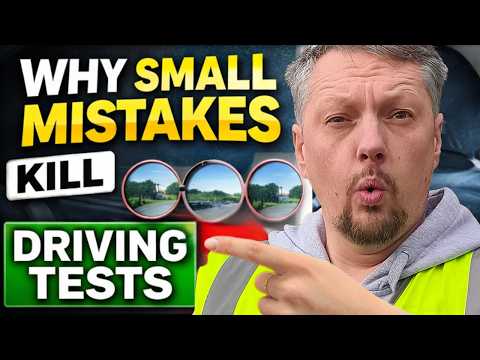
Struggling with nerves before your driving test? You're not alone. With a national average pass rate of just 51.8%, standing out as a confident, competent driver is essential. What if there was one core skill that could instantly make you look test-ready, calm, and in control? Josh Ramwell, a highly respected driving instructor, reveals exactly that. It's not about complex manoeuvres, but a fundamental habit that underpins every safe driving action. Master this, and you'll not only impress your examiner but become a safer driver for life.
The Secret to Instant Test-Readiness: Proactive Observation
What’s the one thing that separates a test-ready driver from one who isn’t quite there? It’s not just flawless steering or perfect clutch control, though those are important. According to Josh Ramwell, it’s all about proactive observation and planning. This isn't just about glancing at your mirrors; it’s about continually scanning your surroundings, understanding what’s happening, and anticipating what might happen next. Think of it as having eyes everywhere, processing information, and using it to make smooth, timely decisions.
When you're consistently observing and planning, you appear calm, collected, and completely in control. Examiners are looking for drivers who can manage risk and respond safely to changing road conditions, not just react to them. A driver who demonstrates excellent observation looks genuinely competent because their actions are always smooth, intentional, and well-considered, never rushed or surprised. This continuous flow of information means you’re always prepared, giving you a massive advantage across any of the 322 test centres across the UK.
Mastering Your Mirrors: Your Eyes in the Back of Your Head
Your mirrors are your best friends on the road. Effective mirror use is a critical component of proactive observation. It’s not enough to just give them a quick flick; you need to understand when to check them and what you’re looking for.
- Before changing speed: Always check your rearview mirror before braking or accelerating significantly. Are you about to slow down quickly? Is there a vehicle too close behind you that needs more warning?
- Before changing direction: Whether you’re turning, changing lanes, or approaching a roundabout, check your relevant mirrors (side and rearview) to ensure the path is clear and to be aware of other road users.
- Before signalling: Your signal tells others your intention, but your mirrors tell you if it's safe to proceed with that intention.
- After signalling: A final check before you commit to the manoeuvre ensures no one has suddenly appeared in your blind spot.
- Every 5-8 seconds: This is a good general rule. Constant, quick glances keep you updated on your surroundings without distracting you from the road ahead.
By making these mirror checks a consistent habit, you create a complete picture of the traffic situation around you. This prevents those last-minute, jerky reactions that scream ‘learner driver’ and instead projects an image of a confident, test-ready driver who's always aware.
Proactive Planning: Driving with Foresight, Not Just Hindsight
Once you’ve gathered information from your observations and mirror checks, the next crucial step is planning. This is where you transform raw data into smooth, safe actions. Planning involves:
- Anticipating hazards: See a pedestrian approaching a crossing? Plan to cover your brake. See a complex junction ahead? Plan your lane positioning and gear selection early.
- Choosing the correct speed and gear: Your observations dictate whether you need to slow down, speed up, or maintain. Plan your gear changes to be smooth and appropriate for the speed.
- Positioning your car: Whether it’s giving cyclists enough room, preparing for a right turn, or maintaining a safe following distance, good planning ensures your car is always in the optimal and safest position.
- Communicating your intentions: Your signals are part of your plan. They tell other road users what you intend to do, giving them time to react.
When you plan proactively, your driving becomes fluid and predictable. You avoid sudden braking, hurried steering, and panicked gear changes. This smoothness is exactly what examiners are looking for. It shows you’re in control and capable of navigating diverse road scenarios safely. Remember, with the national average pass rate hovering at 51.8%, demonstrating superior planning truly makes you stand out from the crowd.
Integrating Observation and Planning into Every Drive
This isn't a skill you pull out just for your driving test; it's a fundamental habit for safe driving. Here’s how to embed it into every lesson and practice drive:
- Junctions and Roundabouts: Before you even reach the give way line, you should be checking mirrors, assessing traffic, and planning your entry or exit. Where are the other cars? Are there cyclists? What gear do I need?
- Changing Lanes: Observation (mirrors, head check) and planning (when is it safe? how much space do I need?) are paramount before you even touch the steering wheel.
- Manoeuvres: Even in low-speed manoeuvres like bay parking or parallel parking, continuous observation of your surroundings (pedestrians, other cars) combined with planning your steering and speed ensures safety and accuracy.
- Driving on different road types: Whether you're navigating busy city streets or quieter residential areas, constant observation helps you adapt your driving to the environment. The principles remain the same, regardless of which of the our test centres hub you take your test at.
Make it a game: try to anticipate what will happen in the next 10-15 seconds. The more you practice this forward-thinking approach, the more natural it will become. It's about developing an active driving mind, not a passive one.
Practice Makes Perfect: Building Your Test-Ready Habits
Building this essential skill takes consistent effort. Here are a few tips to help you:
- Commentary Driving: While driving, verbally (or mentally) describe what you see, what you’re thinking, and what you plan to do next. “I see a cyclist ahead, checking my mirrors, planning to give wide berth, checking right mirror again.” This helps you internalise the process.
- Ask Your Instructor: Get regular feedback from your instructor on your observation and planning. Are you checking mirrors effectively? Are your plans timely?
- Focus on Smoothness: If your driving feels jerky or reactive, it’s often a sign that your observation and planning could be improved. Aim for gentle braking, smooth acceleration, and fluid steering.
Remember, the goal isn't just to pass your test, but to become a safe, confident, and competent driver for life. By mastering proactive observation and planning, you'll not only look instantly test-ready but you'll be genuinely ready for anything the road throws at you.
Key Takeaways
- Proactive observation and planning is the #1 skill to look instantly test-ready and confident.
- Effective mirror use is crucial: know when to check and what to look for, not just glance.
- Planning means anticipating hazards, choosing correct speed/gear, and positioning your car early.
- Consistent observation leads to smooth, controlled driving, impressing examiners.
- Integrate this skill into every driving scenario, from junctions to manoeuvres.
- Practice commentary driving and seek instructor feedback to embed this habit.
Learner Hub
Add this to your final prep
Use the Learner Hub to keep the final days calm: high-risk weak areas, Show Me/Tell Me, documents, routes, and nerves. This starts with observations selected as the focus.
Frequently Asked Questions
What makes a driver look test-ready for their driving test?+
A driver looks test-ready by demonstrating proactive observation and planning. This means constantly scanning surroundings, using mirrors effectively, anticipating hazards, and making smooth, timely decisions. This approach projects confidence, control, and a strong awareness of the road, which examiners highly value.
How often should I check my mirrors during a driving test?+
You should check your mirrors frequently and purposefully throughout your driving test. Aim for quick, regular glances every 5-8 seconds, and always check them before changing speed, changing direction (turning, changing lanes), and before/after signalling. This continuous monitoring keeps you aware of your surroundings.
Is observation a common reason for failing a driving test?+
Yes, poor observation is a very common reason for failing a driving test. Many critical faults, such as not seeing other road users, misjudging gaps, or failing to check blind spots, stem from inadequate observation. Mastering this skill significantly reduces your risk of a critical error and increases your chances of passing.
How can I improve my planning skills for the driving test?+
To improve planning, focus on anticipating scenarios ahead. As you drive, mentally (or verbally) narrate what you see and what action you'll take. For example, 'pedestrian crossing, planning to slow down and cover the brake.' Your instructor can also provide specific feedback and exercises to sharpen your foresight on the road.