HubExplain before driving
Tell Me Questions
Practise the safety-check answers before test day. These are usually asked before you start driving.
Question 1
Question 1Tell Me
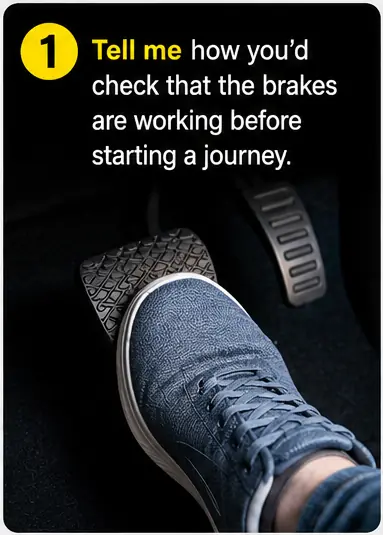
How would you check the brakes are working before a journey?
Plain-English answer
They should not feel spongy or slack. Test them gently as you set off, and the car should not pull to one side.
Why it matters: Good brakes are the difference between a normal stop and a dangerous moment.
Practice tip: Say the answer in three parts: feel, test as you move, no pulling.
YouTube video coming soonSpace for Josh to explain this specific question. 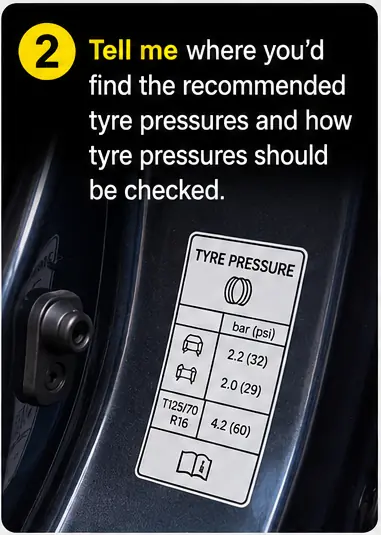
Question 2
psiSafety check
Tyre pressure
Question 2Tell Me
Where do you find the tyre pressures, and how should you check them?
Plain-English answer
Use the handbook or manufacturer information. Check cold tyres with a reliable gauge, adjust them, and refit the valve caps.
Why it matters: Wrong tyre pressure affects braking, steering, grip, and fuel use.
Practice tip: Learn where the tyre-pressure label or handbook information is in the car you use.
YouTube video coming soonSpace for Josh to explain this specific question. 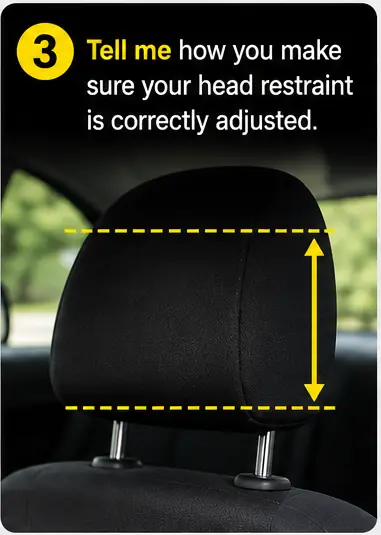
Question 3
okSafety check
Head restraint
Question 3Tell Me
How do you set the head restraint for the best protection?
Plain-English answer
Set the rigid part at least as high as your eyes or the top of your ears, and keep it close to the back of your head.
Why it matters: A badly set head restraint gives less protection in a crash.
Practice tip: Check this before you start driving, the same way you check mirrors and seat position.
YouTube video coming soonSpace for Josh to explain this specific question. 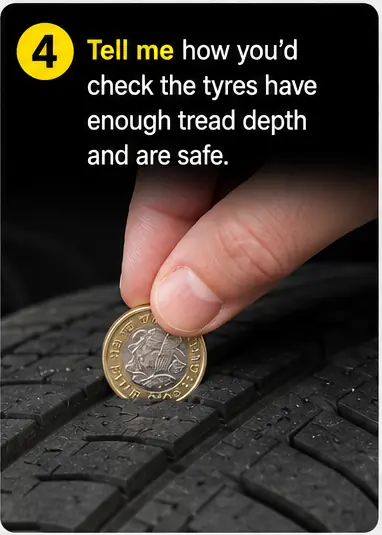
Question 4
psiSafety check
Tyre condition
Question 4Tell Me
How would you check the tyres are safe and have enough tread?
Plain-English answer
Look for no cuts or bulges, and at least 1.6mm tread across the central three-quarters and around the tyre.
Why it matters: Tyres are your only contact with the road, so condition and tread matter.
Practice tip: Practise pointing to the tread and sidewall so the answer feels physical, not just memorised.
YouTube video coming soonSpace for Josh to explain this specific question. 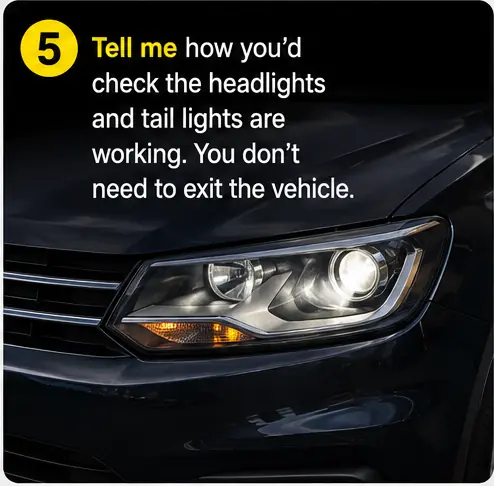
Question 5
lampSafety check
Headlights and tail lights
Question 5Tell Me
How would you check the headlights and tail lights are working?
Plain-English answer
Turn them on, then use reflections or walk around the car to check the front and rear lights.
Why it matters: Other road users need to see you clearly, especially in poor light.
Practice tip: Know the light switch position in the car you will use for the test.
YouTube video coming soonSpace for Josh to explain this specific question. 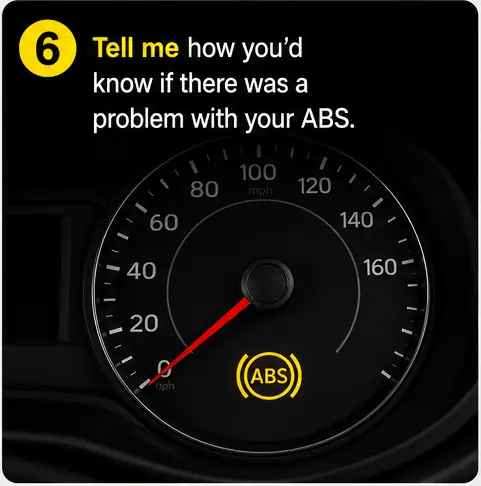
Question 6
Question 6Tell Me
How would you know there is a problem with the anti-lock braking system?
Plain-English answer
The ABS warning light would stay on or come on if there is a fault.
Why it matters: Warning lights help you spot safety problems before they become bigger risks.
Practice tip: Know what the ABS warning symbol looks like on your dashboard.
YouTube video coming soonSpace for Josh to explain this specific question. 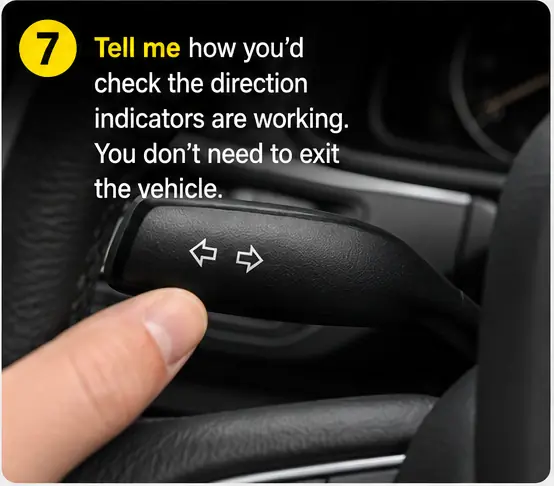
Question 7
Question 7Tell Me
How would you check the direction indicators are working?
Plain-English answer
Use the indicators or hazard lights, then check the lights by walking around the car or using reflections.
Why it matters: Clear signals help other road users understand what you are about to do.
Practice tip: Practise this with the engine off if your car allows it, so you know the controls.
YouTube video coming soonSpace for Josh to explain this specific question. 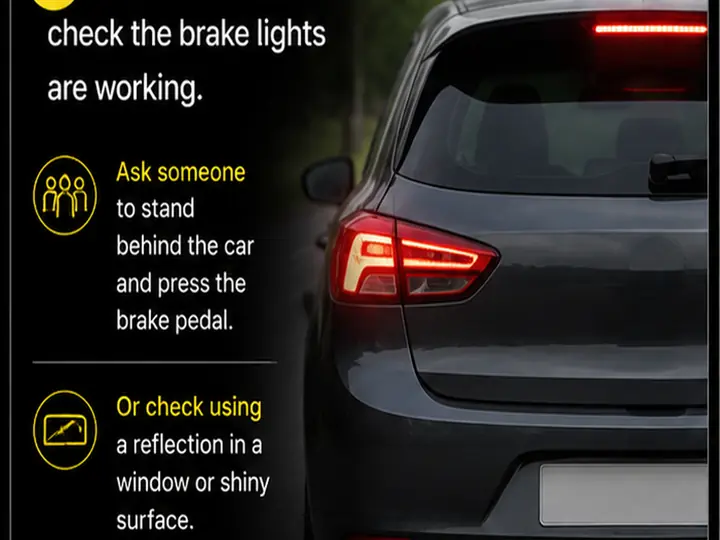
Question 8
Question 8Tell Me
How would you check the brake lights are working?
Plain-English answer
Press the brake pedal and use reflections in windows or garage doors, or ask someone to help.
Why it matters: Drivers behind you need to know when you are slowing or stopping.
Practice tip: Have a simple answer ready if you are alone: use reflections.
YouTube video coming soonSpace for Josh to explain this specific question. 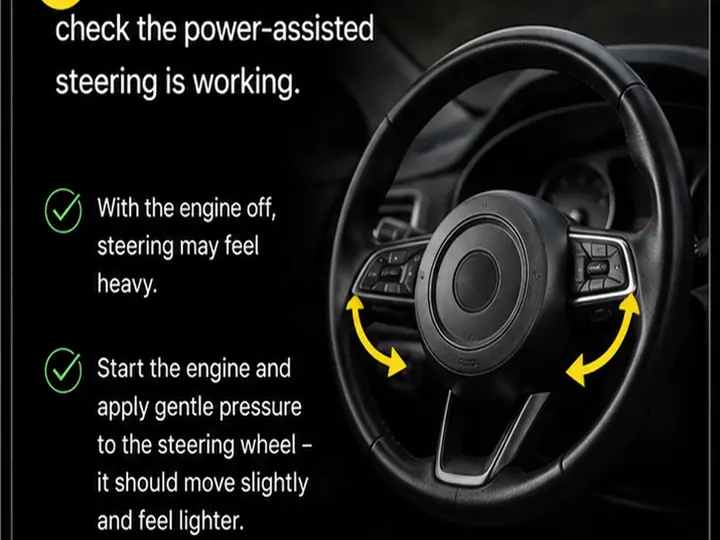
Question 9
okSafety check
Power steering
Question 9Tell Me
How would you check the power-assisted steering is working?
Plain-English answer
Steering should not feel unusually heavy. You can feel assistance as the engine starts or just after moving off.
Why it matters: Heavy steering can make the car harder to control safely.
Practice tip: Keep the answer simple: heavy steering is the warning sign.
YouTube video coming soonSpace for Josh to explain this specific question. 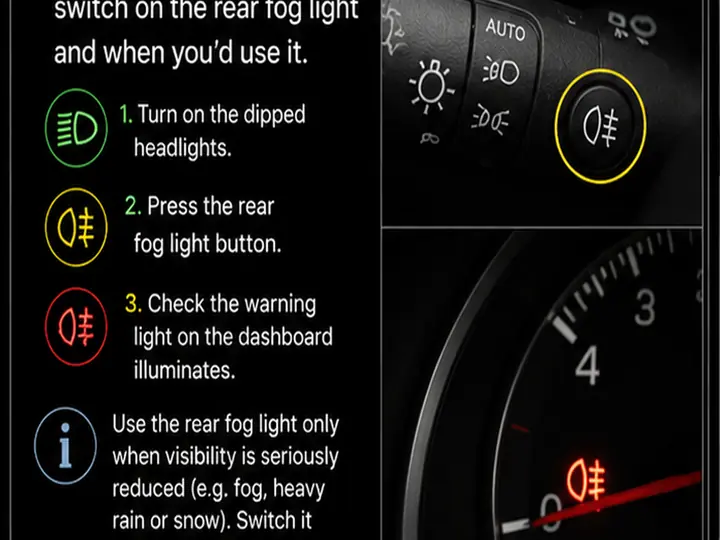
Question 10
lampSafety check
Rear fog light
Question 10Tell Me
How would you switch on the rear fog light, and when would you use it?
Plain-English answer
Use the switch, with dipped headlights if needed, check the warning light, and use it only when visibility is seriously reduced.
Why it matters: Fog lights help visibility in poor conditions, but can dazzle others if used at the wrong time.
Practice tip: Find the rear fog switch and warning light before test day.
YouTube video coming soonSpace for Josh to explain this specific question. 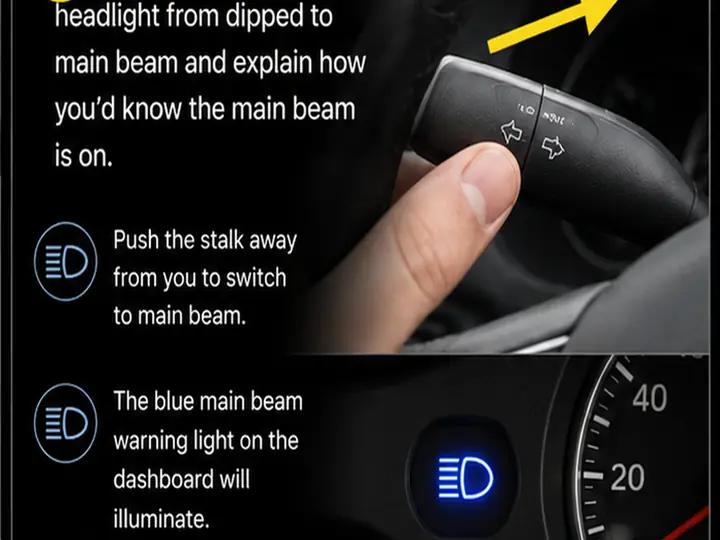
Question 11
Question 11Tell Me
How would you switch from dipped headlights to main beam and know it is on?
Plain-English answer
Use the main-beam control and check the blue warning light on the dashboard.
Why it matters: Main beam helps on dark roads, but you need to know when it is active.
Practice tip: Practise the control while parked so you do not confuse it with indicators.
YouTube video coming soonSpace for Josh to explain this specific question. Under the bonnet
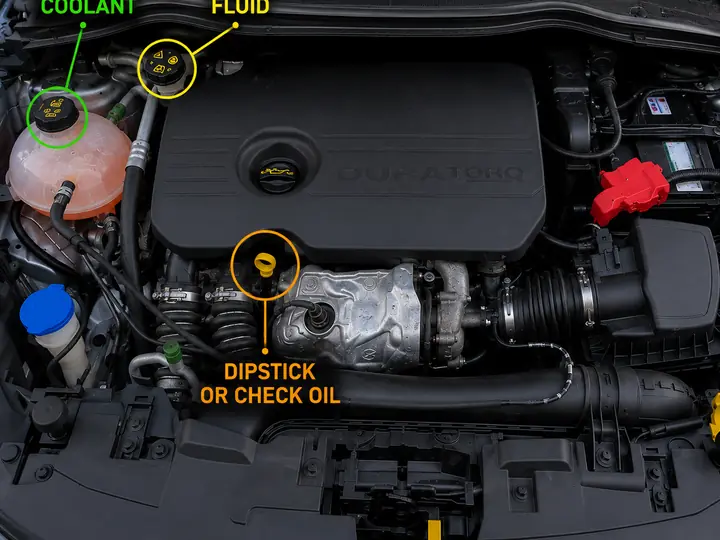
Know the layout first
Before the oil, coolant, and brake-fluid questions, learners need one full overview of the bonnet area so the individual checks make sense.
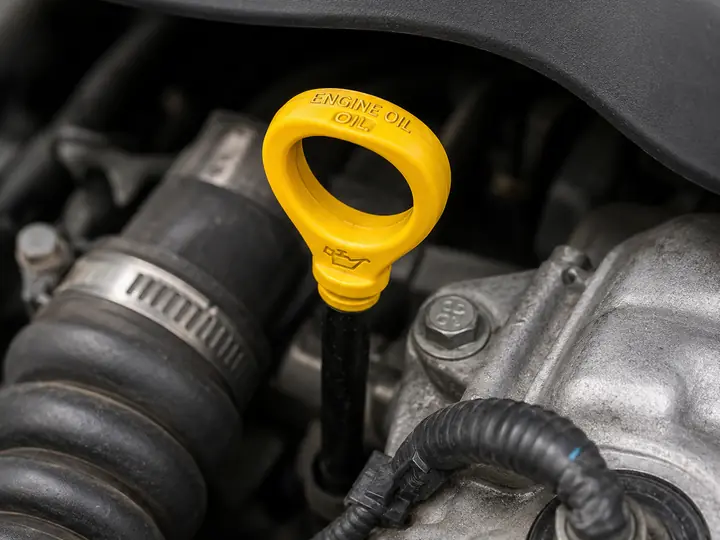
Question 12
Question 12Tell Me
How would you check the engine has enough oil?
Plain-English answer
Open the bonnet, identify the dipstick or oil-level indicator, and check the level against the minimum and maximum marks.
Why it matters: Low oil can damage the engine and leave the car unsafe or unreliable.
Practice tip: Ask your instructor to show you the dipstick or oil display in your test car.
YouTube video coming soonSpace for Josh to explain this specific question. 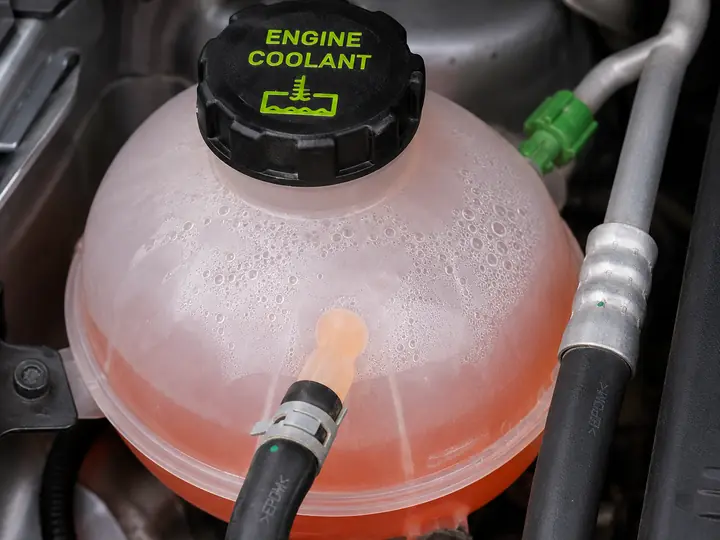
Question 13
lvlSafety check
Engine coolant
Question 13Tell Me
How would you check the engine has enough coolant?
Plain-English answer
Identify the coolant tank or radiator cap and check the level against the markings. Top up to the correct level when safe.
Why it matters: Coolant helps stop the engine overheating.
Practice tip: Do not open a hot coolant cap. For the test, focus on identifying the tank and level marks.
YouTube video coming soonSpace for Josh to explain this specific question. 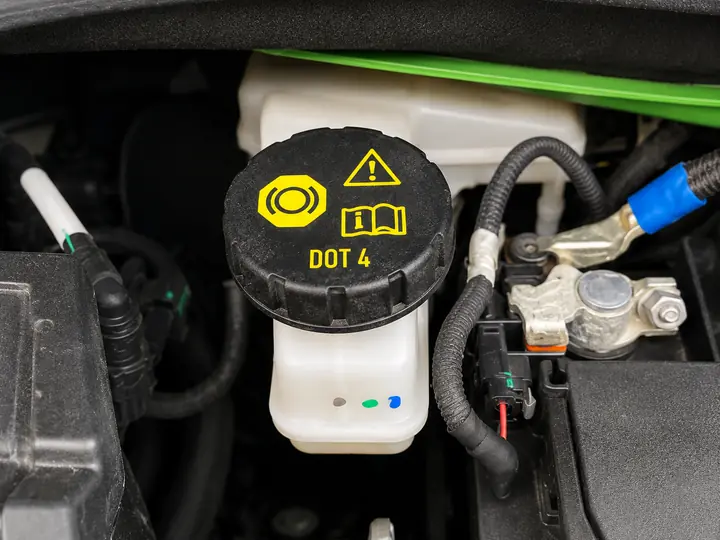
Question 14
Question 14Tell Me
How would you check the hydraulic brake fluid is at a safe level?
Plain-English answer
Open the bonnet, identify the brake-fluid reservoir, and check the level against the high and low marks.
Why it matters: Brake-fluid problems can affect how safely the car stops.
Practice tip: Learn which reservoir is brake fluid, because there are several containers under the bonnet.
YouTube video coming soonSpace for Josh to explain this specific question. Learner Hub
Add this to your test prep
Open the Learner Hub when you want routes, readiness checks, test-centre info, and final-week practice in one place.